Français
 English
 Español
 Deutsch
 Italiano
 Português
 Polski
 Nederlands




Since the outbreak of the Middle East conflict in February 2026 and the partial blockage of the Strait of Hormuz, the price of kerosene has more than doubled in just a few weeks. This surge is upsetting the economic balance of the entire aviation industry, including, and in a singular way, the business aviation and private jet sectors. We take a closer look at the mechanisms at play, the impact on charter costs, and the strategies to be adopted.
1. The mechanics of the shock: from $88 to $216 a barrel in six weeks
On February 28, 2026, the US-Israeli strikes against Iran’s oil infrastructure sent shockwaves through the energy markets. In less than six weeks, the price of a barrel of kerosene rose from $87-90 to over $216, an increase of 140%. In Europe, according to the International Air Transport Association (IATA), a tonne of aviation fuel now costs $1,700, i.e. 2.5 times the average price in 2025.
This sharp rise is due to two factors: firstly, the rise in crude oil prices, accentuated by the strikes on Gulf infrastructures; and secondly, the partial blockage of the Strait of Hormuz, through which some 20% of the world’ s oil and 30% of the kerosene consumed in Europe passes. The result is a market shortage that is amplifying the rise well beyond crude levels. By way of illustration, Brent crude rose from $85 to $103-107 a barrel in the first few weeks, while kerosene jumped by 84% on the North-West European market alone.
→ Kerosene in Europe: $830/tonne (end February) → $1,528/tonne (early March) → $1,700/tonne (April 2026)
→ Source: IATA, Reuters, RTS
For commercial airlines, this explosion represents an immediate structural challenge. According to Pascal de Izaguirre, President of the Fédération nationale de l’ aviation et de ses métiers (Fnam), kerosene, which used to account for 25-30% of their operating costs, now makes up around 45%. With average margins below 4%, the impact on fares is inevitable and already visible.
2. What this means in concrete terms for commercial air transport
The cascade of reactions in the airline industry is rapid and multi-faceted. Air France-KLM initially applied a fuel surcharge of 50 euros on long-haul economy class round-trip tickets, before doubling it to 100 euros. On transatlantic flights, the surcharge is as high as 319 euros per journey. Some twenty of the world’s leading airlines have followed the same logic: United Airlines, Air Canada, Air India, Cathay Pacific and Qantas.
Disruptions are not limited to prices. SAS has cancelled a thousand flights since the crisis began. The Lufthansa group has suspended its routes to the Middle East until the end of April, and even until the end of October for some of its airlines. Ryanair has publicly warned that it could cut up to 10% of its flights between May and July if tensions persist. In Italy, several airports have faced direct fuel restrictions.
Asia-Europe routes are particularly hard hit: bypassing Iranian airspace and part of the Gulf adds between one and two hours to the flight time, mechanically increasing fuel consumption and costs. IATA has also warned that even if the Strait of Hormuz were to reopen for good, a return to normal supply conditions would take “several months at least”.
→ Air France-KLM: surcharges of up to €319/journey on transatlantic flights
→ Ryanair: threat of 10% flight cancellations May-July 2026
→ Sources : Air Journal, Franceinfo, IATA
3. Private jets: different, but real exposure
Business aviation is not immune to this shock, but it is feeling it in structurally different ways. Unlike commercial airlines, whose margins are slim and customers price-sensitive, private aviation operates in a segment where the value is not the cost of the flight, but the time saved, discretion and flexibility. Private jet customers don’t choose this mode of transport because it’s cheap: they choose it because it’s irreplaceable in their operational or personal constraints.
That said, the economic reality of chartering directly integrates the cost of kerosene. On a private jet flight, fuel represents on average 30 to 40% of total operating costs, depending on the aircraft category. A light jet consumes between 700 and 900 liters per flight hour; a heavy jet can exceed 2,000 liters. With the price of kerosene more than doubling, the impact on charter quotes is inevitable, even if it remains proportionally less visible in a high overall ticket.
The European private jet charter market was worth $10.23 billion in 2025, and is expected to grow to $10.72 billion by 2026, according to Mordor Intelligence. In France, demand grew by 6% in 2025, compared with 1.9% for the European average. This favorable dynamic acts as a shock absorber: structural demand remains solid, driven by factors that have nothing to do with the price of kerosene.
→ European private jet charter market: $10.72 billion forecast for 2026 (Mordor Intelligence)
→ Demand in France +6% in 2025 (EBAA Traffic Tracker)
4. How much does it actually cost? The Paris – Geneva example before and after the crisis
To illustrate the real impact on charter quotes, let’ s take the Paris Le Bourget – Geneva Cointrin route: one of Europe’ s busiest private routes, with a flight time of around 55 minutes and a distance of 550 km. It’s an emblematic flight for Franco-Swiss business customers – executives, bankers, consulting professionals – who choose the private jet to follow a meeting in Paris in the morning and be back in Geneva before lunch.
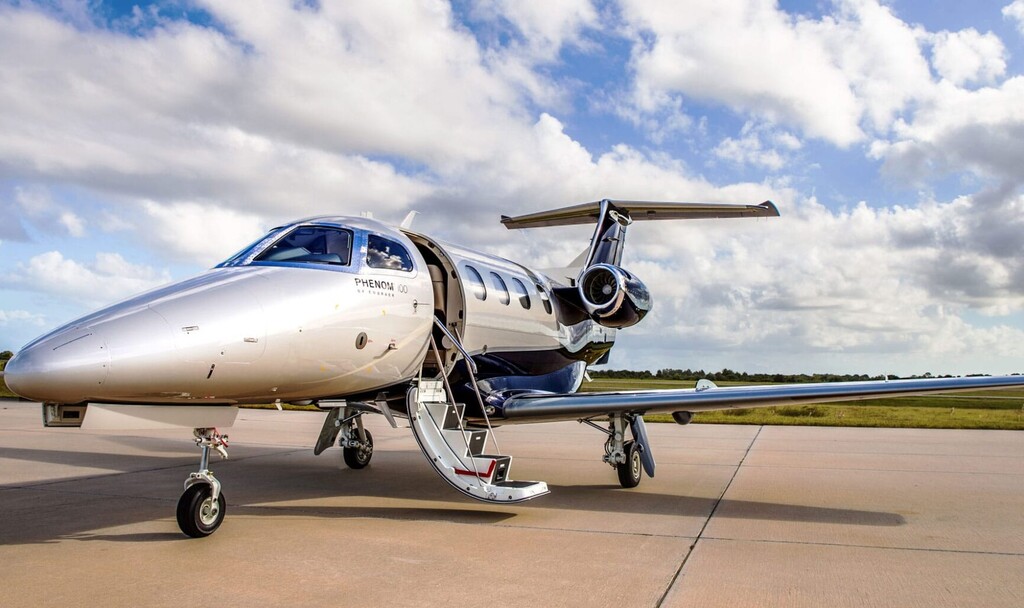
Based on published market rates (Avico, LunaJets, Charter Wind) and taking into account the average increase in kerosene costs on a Paris-Geneva route (~550 km, ~55 min flight time), here are the orders of magnitude to bear in mind. A Citation Mustang-type Very Light Jet (1 to 4 passengers) would cost between EUR 4,800 and EUR 5,500 round-trip at the October 2025 reference rates, with an estimated increase of between +10 and +15% in April 2026. A Phenom 300 or CJ3 Light Jet (4 to 6 passengers) costs between EUR 7,000 and EUR 9,000 one way, with an additional cost of +12 to +15%. Finally, a Challenger 350 type Midsize Jet (6 to 9 passengers) costs between EUR 10,000 and EUR 13,000 one-way, for an increase of +13 to +17%. These surcharges vary according to operators and their level of hedging.
These figures call for two important clarifications. Firstly, the fare increase on a short-haul flight like Paris-Geneva remains contained in absolute terms: between 500 and 1,500 euros, depending on the aircraft category. In terms of the overall economy of a private flight, this surcharge represents a marginal variation that is incommensurable with what travellers experience on long-haul commercial flights. This is precisely where the structural resilience of the premium segment lies.
Secondly, actual fare levels vary significantly according to each operator’s level of fuel hedging. Some have secured their kerosene purchases at pre-crisis prices for 6 to 12 months, and can therefore maintain more stable rates. Others, with less hedging, pass on the increase more directly. Knowing the financial structure of your partner operators is precisely the behind-the-scenes work of a specialized broker, invisible to the customer but decisive for the final quote.
5. The impact on long-haul private jet flights
On long-haul flights from Paris to Dubai, Geneva to Tokyo, London to New York, the situation is markedly different. The absolute share of kerosene in the total cost of a transcontinental flight by heavy jet is much higher. A Paris-Dubai flight in a Gulfstream G650 consumes between 12,000 and 16,000 liters of kerosene. At current fuel prices, the surcharge compared with pre-crisis levels can reach 15,000 to 25,000 euros on a single one-way flight.
Then there’s the question of routes. As with commercial aviation, flights that used to transit Iranian airspace or Gulf hubs have to be rerouted. Compulsory detour lengthen flight paths by 1 to 3 hours, depending on the destination, further increasing fuel consumption and aircraft downtime. A factor to be systematically taken into account in quotations for destinations in Asia, the Middle East and the Gulf.
On the other hand, and this is an important nuance, demand from ultra-HNWI customers for these destinations is not collapsing. It is adapting. Some customers are postponing leisure travel, but business trips and mission-critical missions are holding up well. The value of private jets on these routes – in terms of time savings, confidentiality and operational continuity – cannot be replaced by a commercial alternative.
6. The broker’s role in the face of fare instability
It is precisely in this context of instability that the added value of a broker specialized in private aviation takes on its full dimension. When prices fluctuate week after week, when operators adjust their fuel surcharges dynamically, when certain aircraft are rerouted or unavailable due to the logistical constraints of the crisis, real-time market knowledge becomes a critical skill.
A broker who knows the hedging levels of his partner operators can steer his customers towards the solutions least exposed to market volatility. He knows which operators have absorbed part of the rise, which aircraft are more economical and can offer a better cost-performance ratio in times of high kerosene prices, and which alternative routes can optimize trajectories.
This is the invisible work that the customer doesn’t see: the behind-the-scenes negotiation, the reading of market conditions, the selection of operators not just on face value, but on their cost structure and operational reliability in a degraded environment. Selling time, not flights – this also means protecting customers from market complexity, sparing them unpleasant pricing surprises and ensuring that their mobility is never dependent on geopolitical vagaries.
7. Outlook: what can we expect in the coming months?
Three scenarios emerge for the summer of 2026. In the optimistic scenario, an effective ceasefire and the reopening of the Strait of Hormuz would enable a gradual normalization of prices over two to three months. Summer prices would remain higher than in 2025, but without a price explosion.
In the intermediate scenario, which many analysts consider the most likely, tensions are prolonged without any major escalation. Kerosene prices remain high, and charter prices for the summer of 2026 would be 20% to 40% higher than in 2025, according to analysts. This scenario places operators in a complex position: maintaining supply, managing costs, and preserving the loyalty of a demanding clientele.
In the pessimistic scenario, a military escalation would lead to lasting supply disruptions. The risk of a physical shortage of kerosene at certain airports would become real. For business aviation, such a scenario would paradoxically reinforce demand: those who can afford the exclusivity of a private flight don’t give up travelling – they travel differently.
Conclusion
The kerosene crisis of 2026 reminds us of a structural truth about aviation: it’ s an industry exposed to global geopolitics in a way that few other sectors are. For private jet players, this crisis is both a cost management challenge and an opportunity to demonstrate their value. In an environment where uncertainty has become the norm, competence, responsiveness and operator relations make the difference between a solution and a dead end.
At AEROAFFAIRES, we monitor market trends in real time to guarantee our customers charter solutions adapted to these new pricing conditions. Because our role is not to sell you a flight, it’s to sell you time.
Sources: IATA, Fnam (Pascal de Izaguirre), Air Journal, Franceinfo, RTS, Ulysse.com, Mordor Intelligence, EBAA Traffic Tracker, Avico, LunaJets, Charter Wind, Reuters.