Français
 English
 Español
 Deutsch
 Italiano
 Português
 Polski
 Nederlands


World Cup 2026 by private jet: constraints, solutions and challenges for managers
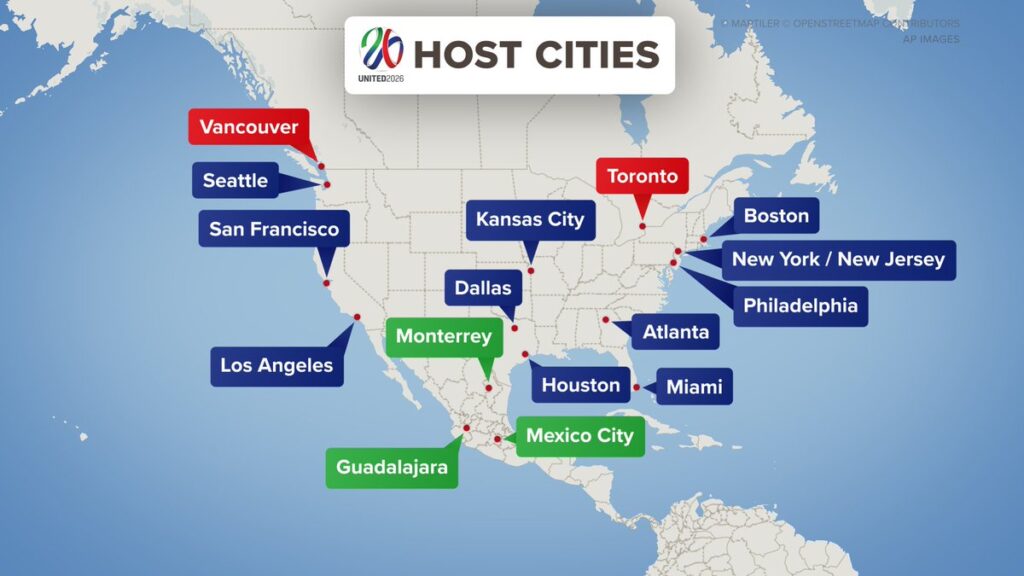
From June 11 to July 19, 2026, the FIFA World Cup will be held simultaneously in the United States, Canada and Mexico, with 16 host cities and 104 matches. It’s the busiest edition ever. For an executive wishing to attend one or more matches, the private jet is not a comfort: it is often the only option capable of absorbing saturated slots, TFRs (Temporary Flight Restrictions) imposed by the FAA around stadiums, and the shortage of jet parking within a 150 km radius of host cities on match days.
The challenge is not so much to “fly private” as to anticipate. Slots at executive airports such as Teterboro (New York), Van Nuys (Los Angeles), Opa-Locka (Miami) or Toluca (Mexico) are blocked up to 6 to 8 weeks before the big games. After that, aircraft are diverted to secondary airports 45 to 90 minutes’ drive from the stadium, at a time when ground access is also saturated.
This article details the actual operational constraints, concrete solutions and travel strategy for an executive, family office or delegation wishing to travel to the 2026 World Cup by private jet.
What you need to know in 30 seconds
- 16 host cities in 3 countries: 11 in the United States, 3 in Mexico, 2 in Canada.
- Executive airport slots to be booked a minimum of 6 to 8 weeks prior to high-attendance matches (opening, final, USA vs. Mexico, quarter-finals, semi-finals).
- FAA TFRs expected within a 30 nautical mile (approx. 55 km) radius of stadiums on game days, based on the Super Bowl model.
- U.S. Customs, APIS, eAPIS, ESTA or B1-B2 visa required for private jet entry into the U.S.
- Jet parking beyond 24 hours: often impossible at primary airports, aircraft repositioning necessary.
- Approximate cost of a flight from Paris to New York on a heavy jet (Global 6000, Falcon 7X): €95,000 to €140,000 one-way, excluding event handling.
The 16 host cities and their executive airports
The 2026 World Cup is being played out over an immense territory, from Vancouver to Mexico City, from Los Angeles to Miami. Each host city imposes a different flight strategy, depending on the configuration of its executive airport, slot availability and proximity to the stadium.
| Host city | Stadium | Main executive airport | Alternate airport | Distance to stadium |
|---|---|---|---|---|
| New York / New Jersey | MetLife Stadium | Teterboro (KTEB) | Morristown (KMMU) | 15 km / 40 km |
| Los Angeles | SoFi Stadium | Van Nuys (KVNY) | Hawthorne (KHHR) | 30 km / 8 km |
| Miami | Hard Rock Stadium | Opa-Locka (KOPF) | Fort Lauderdale Exec (KFXE) | 10 km / 25 km |
| Dallas | AT&T Stadium | Dallas Love Field (KDAL) | Addison (KADS) | 30 km / 40 km |
| Atlanta | Mercedes-Benz Stadium | DeKalb-Peachtree (KPDK) | Fulton County (KFTY) | 20 km / 15 km |
| Houston | NRG Stadium | Sugar Land (KSGR) | Hobby (KHOU) | 30 km / 15 km |
| Boston / Foxborough | Gillette Stadium | Norwood (KOWD) | Hanscom (KBED) | 40 km / 55 km |
| Philadelphia | Lincoln Financial Field | Northeast Philadelphia (KPNE) | Trenton-Mercer (KTTN) | 25 km / 60 km |
| Kansas City | Arrowhead Stadium | Wheeler Downtown (KMKC) | Johnson County Exec (KOJC) | 15 km / 45 km |
| San Francisco / Bay Area | Levi’s Stadium | San Jose Mineta (KSJC) | San Carlos (KSQL) | 5 km / 25 km |
| Seattle | Lumen Field | Boeing Field (KBFI) | Renton (KRNT) | 8 km / 20 km |
| Toronto | BMO Field | Pearson FBO (CYYZ) | Oshawa (CYOO) | 25 km / 70 km |
| Vancouver | BC Place | Vancouver Int. (CYVR) | Boundary Bay (CZBB) | 15 km / 30 km |
| Mexico | Estadio Azteca | Toluca (MMTO) | AIFA (MMSM) | 60 km / 55 km |
| Guadalajara | Estadio Akron | Guadalajara (MMGL) | 20 km | |
| Monterrey | Estadio BBVA | Del Norte (MMAN) | Monterrey Int. (MMMY) | 15 km / 35 km |
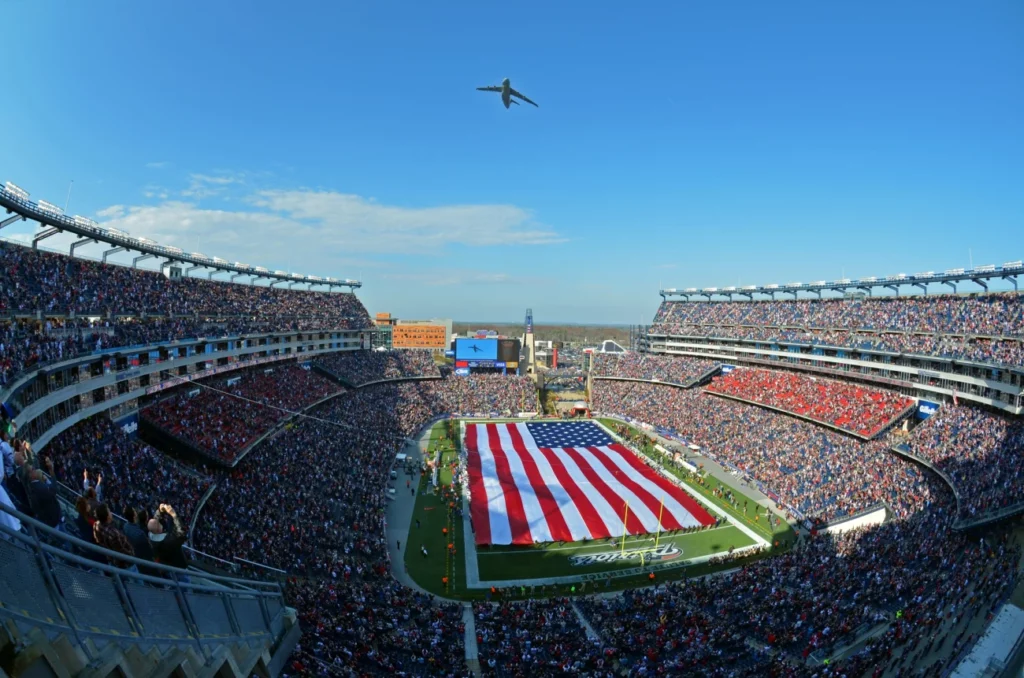
Operational note: distances to the stadium do not reflect actual time on match days. FIFA traffic plans close off the surrounding area for 3 to 5 km, often requiring a helicopter transfer or a 3 to 4-hour early departure.
Major operational constraints to anticipate
Airport slots and PPR: the real bottleneck
Executive airports close to stadiums are not designed to absorb an influx of private jets over 24 to 48 hours. Teterboro, Van Nuys and Opa-Locka already generate between 400 and 600 jet movements per day at peak times. For comparable events (Super Bowl, NBA finals, F1 Miami), these airports switch to PPR (Prior Permission Required) status: each arrival must obtain a named slot, often allocated to the first to arrive.
For the 2026 World Cup, the American FBOs (Fixed-Base Operators) have already announced that slots will be allocated from the opening on June 11 until the final on July 19 at MetLife Stadium.
FIFA TFR: airspace closes in around stadiums
The FAA will activate Temporary Flight Restrictions around stadiums on match days, based on the proven model of the Super Bowl and NFL gatherings. In concrete terms:
- Typical radius: 30 nautical miles, or around 55 km, around the stadium.
- Ceiling: up to FL180 (5,500 m).
- Activation: 1 hour before kick-off to 1 hour after the end of the game.
- Consequence: no unauthorized IFR or VFR flights in the zone. Approach paths are modified, and flight times extended from 10 to 25 minutes.
An executive landing in Teterboro during a match at MetLife Stadium would be subject to a mandatory reroute, or even a holding period of several tens of minutes.
Jet parking: a structural shortage at event hubs
Jet parking is the underestimated critical point. At airports such as Opa-Locka and Van Nuys, parking capacity is fixed and already largely pre-booked. Three possible scenarios:
- Drop and go: passenger drop-off, immediate repositioning of the aircraft to a secondary airport 100-200 km away, return for recovery.
- Negotiated parking via FBO partner: rates increased by 200 to 400% on match days.
- Preventive rerouting: direct landing at secondary airport, helicopter or car transfer.
The cost of repositioning a heavy jet is €8,000 to €15,000 per round-trip movement.
Formalities for entering the United States by private jet
Entering the U.S. with a private jet is subject to a strict chain of formalities:
- eAPIS (Electronic Advance Passenger Information System): transmission of the passenger list to CBP at least 60 minutes before takeoff for the United States.
- ESTA or B1/B2 visa valid for all non-American passengers and crew.
- APIS Canada (Canadian equivalent) and Mexico AFAC for Mexico.
- AOE (Airport of Entry) mandatory for first US stopover. Not all executive airports have customs on site: Teterboro does, Van Nuys doesn’t, which requires clearance at Long Beach or Santa Barbara.
An ESTA oversight can block a manager for 72 hours and cause him to miss his match.
Specific regulatory constraints in 2026
- Part 135 only for commercial charters in the USA. European operators may not operate domestic US flights with paying passengers (cabotage prohibited). A Paris-New York flight is possible. A New York-Miami flight with the same European operator and different passengers is not.
- Cabotage in Canada and Mexico: similar rules, often involving a change of operator for domestic flights.
- Customs and ATC: slot and fee increases expected over the period. Previous Super Bowl LV: plus 35% on landing fees.
Concrete solutions for controlled travel
Anticipate 6 to 12 weeks before the targeted match
For major events such as the Opening Match (Estadio Azteca, June 11), the Final (MetLife Stadium, July 19), the semi-finals or the quarter-finals with a major nation, the rule is simple: book as early as January or February 2026. Slots for key FBOs have already begun to fill up for official delegations, sponsors and broadcasters.
Choose the aircraft according to mission, not prestige
| Typical mission | Recommended aircraft | Autonomy | Passengers | Indicative hourly cost |
|---|---|---|---|---|
| Europe to East Coast (NYC, Miami, Boston) | Global 6000, Falcon 7X, Gulfstream G550 | 11,000 to 12,500 km | 12 à 14 | 11 000 à 14 000 € |
| Europe to West Coast (LA, SF, Seattle) | Global 7500, Gulfstream G650 | 13,500 to 14,800 km | 14 à 19 | 15 000 à 19 000 € |
| US domestic flights between host cities | Challenger 350, Citation Latitude | 5,500 to 6,500 km | 8 à 9 | 5 500 à 7 500 € |
| Stadium transfers (Mexico City, LA) | AW139, H145 helicopter | not applicable | 6 à 8 | 4,500 to €6,500 per hour |
Building a multi-city strategy
The World Cup lends itself to combined itineraries. A European executive can fly from Miami (group stage) to Dallas (round of 16) to New York (final) over 10 days, with the same European aircraft on standby or a change of US operator for domestic segments. The logic of the “jet that stays with the customer” is often sub-optimal and costly. It’s better to optimize the flight plan according to the slots available.
Integrating helicopters into stadium strategy
In areas of extreme traffic (Mexico City, Los Angeles, New York), helicopters are the only reliable solution for reaching the stadium from the executive airport. The heliports concerned (Manhattan Downtown KJRB, Van Nuys, Toluca) also apply PPRs and must be pre-booked at the same time as the jet.

Three customer cases
Case 1: an executive from a French industrial group at the July 19 finale
Context: the CEO of a European industrial group invites 8 employees and strategic customers to the final at MetLife Stadium. Round trip from Paris to New York over 72 hours.
Constraints:
- TFR active in New Jersey from 2pm to 8pm on the day of the match.
- Teterboro saturated, slot obtained at D-9 weeks only thanks to an early booking in March.
- Parking impossible for 48 hours, aircraft repositioned at Stewart (KSWF) between flights.
Solution: Global 6000 on ad hoc charter, arriving in Teterboro at 11am the day before (before TFR activation), immediate repositioning at Stewart, helicopter transfer to Manhattan (KJRB) then MetLife on match day, direct return to Teterboro Paris on Sunday evening.
Indicative budget: €280,000 all-inclusive (flight, helicopter, event handling, catering).
Case 2: a Middle Eastern family office on 3 matches in 10 days
Context: 12 members of a family wanted to follow their national team through the group stage (Houston), the round of 16 (Kansas City) and the quarter-finals (Dallas).
Constraints :
- 3 cities, 3 different airport configurations.
- Need for a US operator for domestic segments (cabotage).
- Staggered match schedules requiring night flights.
Solution: Gulfstream G650 operated from Europe for Dubai-Houston outbound and return. Bombardier Challenger 350 operated by a U.S. Part 135 partner for inbound flights to Houston, Kansas City and Dallas. Centralized customs coordination, a single point of contact for the entire trip.
Indicative budget: €520,000 over 10 days.
Case 3: an official corporate sponsor delegation, 24 people, group flight
Context: an official FIFA sponsor organizes a hospitality trip for 24 VIP clients to the opening in Mexico and a match in Los Angeles.
Constraints:
- Insufficient classic private jet capacity (max 19 passengers on Global 7500).
- VIP customer mix demands premium comfort.
- Toluca slots highly sought-after for opening match.
Solution: charter an ACJ320neo (Airbus Corporate Jet) configured for 24 passengers, operated from Europe. Parking negotiated in Toluca via partner FBO, repositioning at AIFA between the two matches. AEROAFFAIRES team on site for FBO coordination, customs and stadium transfers.
Indicative budget: €780,000 over 6 days.

Renting private jets
since 1991

20,000
private jets

45,000
completed flights

120,000+
passengers

4.9/5
customer satisfaction

100%
carbon offsetting
Why use an airline concierge service like AEROAFFAIRES?
For an event on the scale of the 2026 World Cup, the added value of an air concierge broker is not measured by the price of the flight, but by the quality of execution under pressure.
What AEROAFFAIRES does concretely for this type of mission:
- Network access: direct partnerships with more than 7,000 certified operators worldwide, including the main American Part 135 operators, essential for US domestic flights.
- Direct FBO slot negotiations with Teterboro, Van Nuys, Opa-Locka, Toluca and Pearson, including locked slots.
- Complete customs management: eAPIS, ESTA, visas, CBP coordination, AOE.
- Anticipation of FIFA TFRs and adaptation of flight plans in real time.
- Repositioning and parking solutions negotiated well in advance of the tournament.
- Single point of contact 24/7 throughout the trip. A single point of contact for the executive or executive assistant.
- Group flights for up to 200 passengers via VIP charter (ACJ, BBJ, 737-800).
The differential is operational, not commercial. A Teterboro slot obtained at D-9 weeks is worth more than a negotiated fare of 5% on the aircraft.
Also on AEROAFFAIRES: private flights to New York, private flights to Miami, private flights to Los Angeles, private flights to Mexico City, charter and group flights, air concierge services.
Conclusion
Attending the 2026 World Cup by private jet is perfectly feasible, provided you treat the constraints as an operational project and not simply as a reservation. FBO slots, FIFA TFR, US cabotage, jet parking and customs formalities form a chain in which a single faulty link jeopardizes the entire trip. Executives who look ahead to the first half of 2026 secure the best slots. Those who wait until 30 days beforehand will be forced to make trade-offs by default.
AEROAFFAIRES supports executives, family offices and corporate delegations throughout the tournament, from booking the Teterboro slot to coordinating the stadium helicopter in Mexico City.
For a personalized quote for your trip to the 2026 World Cup, contact our concierge team: request a quote.
A question? Contact our airline experts

Isabelle CLERC
CEO AEROAFFAIRES

François-Xavier CLERC
Founder AEROAFFAIRES
Our airline experts remain at your disposal to help you at every stage of your reservation.
Sources
- FIFA, Host Cities 2026 World Cup (fifa.com/worldcup/2026)
- FAA, Temporary Flight Restrictions and Stadium Events (faa.gov)
- NBAA, Business Aviation Operations for Major Events (nbaa.org)
- U.S. Customs and Border Protection, Private Aircraft eAPIS (cbp.gov)
- Transport Canada and AFAC Mexico, International General Aviation Requirements